Blog
Insights
Pulse Surveys in 2026: The Complete Guide (Frequency, Length, and Best Practices)
Build an effective employee pulse survey program in 2026. Learn cadence, question design, trust, and how to turn feedback into real leadership action.

Benjamiin Laudrup
CEO & Co-founder — Leadership, Psychology & Coaching
Jan 12, 2026

Introduction: why pulse programs changed the rules
Organizations used to treat employee feedback like an annual audit: run a big survey, publish a report, and hope leaders “do something with it.” In 2026, that approach is simply too slow. Work changes faster, teams are more distributed, and small frictions compound into stress, disengagement, and attrition long before an annual survey can catch it.
A modern listening program is closer to a leadership operating system: a steady rhythm of measurement, meaning-making, and visible improvement. That’s the real promise of an employee pulse survey—not “more data,” but a faster feedback loop that can actually influence day-to-day work.
This guide explains how to build a pulse program that people trust, leaders can run consistently, and organizations can learn from over time. It’s intentionally practical, but it won’t give away a full question library—because strong programs don’t rely on copying a list. They rely on selecting the right questions for the right moment, inside a measurement model that leaders can act on.
What a pulse survey is (and what it isn’t)
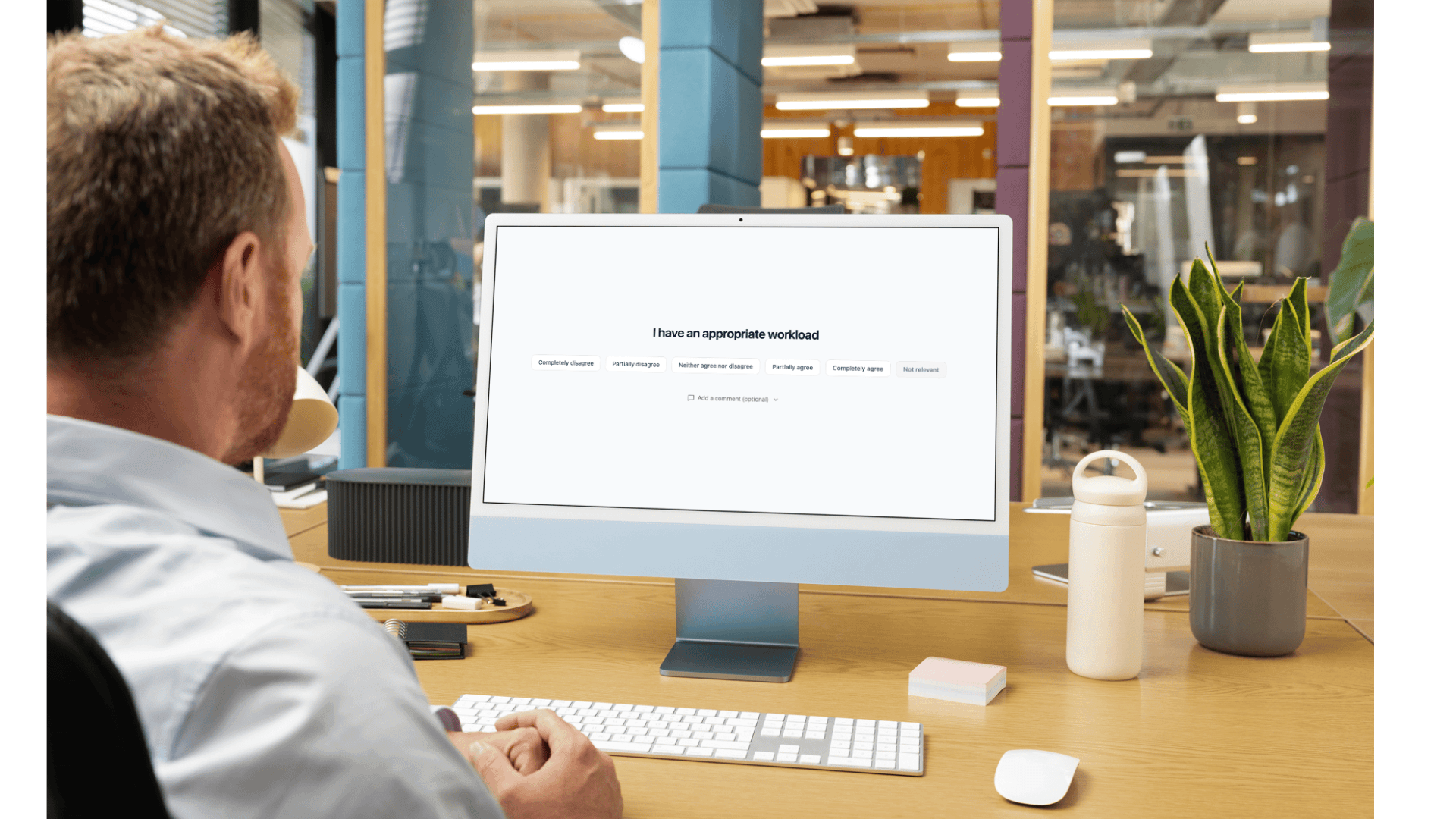
A pulse survey is a short, repeatable check-in designed to detect meaningful changes in how people experience work. The key word is repeatable. Pulse measurement is valuable because it tracks direction and momentum, not because it delivers a perfect “score” once.
A pulse survey is not:
A replacement for leadership conversations, team retros, or 1:1s
A place to dump every topic HR wants to measure
A one-off engagement initiative with no follow-through
The pulse format works best when it’s part of a cadence: measure → interpret → decide → act → communicate → re-measure. Without that loop, you’ll collect opinions—but not improve culture.
Why pulse surveys matter more in 2026 (the real drivers)
1) Culture is increasingly shaped by systems, not speeches
Culture is created through everyday signals: workload expectations, meeting norms, decision rights, psychological safety, and how leaders respond when things go wrong. These systems shift continuously—especially during growth or transformation. A pulse cadence helps you notice the drift early.
2) Hybrid and distributed work magnify weak signals
When people are less physically co-located, feedback becomes less visible. Leaders can easily misread silence as “everything is fine.” Pulse feedback restores visibility—particularly on trust, collaboration, wellbeing, and clarity.
3) Employees judge listening by follow-through, not intention
People don’t become cynical because you asked a question. They become cynical because nothing happened afterward. The strongest programs treat communication and action planning as part of the survey, not an optional add-on.
The core design principle: “Core + Rotate”
Most pulse programs fail for one of two reasons:
They ask too much, too often, and participation drops
They change questions constantly, and trend data becomes meaningless
The fix is a simple structure:
Core questions (stable, every round)
These are your “trend anchors.” They cover the few fundamentals you want to track consistently across time and teams (e.g., workload sustainability, safety to speak up, clarity, managerial support).
Rotating module (small, theme-based)
This is where you explore a timely topic without bloating the survey: onboarding, change communication, cross-team collaboration, stress, or leadership transitions.
This approach gives leaders continuity (core trends) and relevance (theme focus) without turning the survey into a quarterly exam.
Cadence: how often to run pulses without creating fatigue
Cadence is a business decision. The right frequency depends on how quickly you can act and how quickly your environment changes.
Recommended cadences (choose the one you can sustain)
Monthly
Best default for most organizations
Gives time for teams to interpret results and implement actions
Keeps participation healthy when surveys are short
Quarterly
Strong option if leadership capacity is limited
Better when you’re building maturity and want fewer “touchpoints”
Works well as a deeper theme check-in while keeping lightweight monthly pulses in selected areas
Biweekly or weekly
Only recommended for specific contexts:
Frontline operations with fast-changing conditions
High-change teams (reorgs, peak seasons, new tooling)
Pilot groups testing interventions with fast feedback
Requires exceptionally strong follow-through (often within 7–14 days)
A simple rule that prevents over-surveying
If managers cannot share results and agree on 1–2 actions within two weeks, weekly pulses are too frequent. Your listening rhythm must match your execution rhythm.
Length: how short is “short” in 2026?
Pulse surveys should feel respectful of time. People should be able to finish on a phone without needing to “set aside time” to complete it.
Practical length guidelines
Monthly: 10–15 questions, including one optional open-text prompt
Quarterly: 15–20 questions, still lightweight but more thematic depth
Twice a year deep-dive: 20–30 questions, used selectively, not constantly
The hidden truth about survey length
Survey length is not just about minutes. It’s about perceived effort. A survey with simple, clear statements can feel easier than a shorter survey with vague or confusing wording. That’s why question quality matters as much as question count.
What to measure: making “culture” specific (not vague)
Many culture surveys fail because they ask about “culture” as if it’s one thing. It isn’t. Culture is a system of lived experiences that can be measured through concrete, leadership-influenceable dimensions.
A reliable measurement model does three things:
Turns culture into actionable topics
Allows trend tracking over time
Helps leaders prioritize without drowning in metrics
The Culturequest Culture Score model (10 dimensions)
Below is a structured model that avoids vagueness by measuring culture through specific dimensions that leaders can influence.
Wellbeing
Stress Management & Workload
Physical Health
Trust & Safety
Psychological Safety
Team Dynamics & Trust
Management
Belonging & Inclusion
Social Community
Diversity, Equity & Inclusion (DEI)
Purpose & Growth
Motivation & Personal Growth
Organizational Purpose & Alignment
Work Environment
Physical Work Environment
This model helps leaders interpret results in a meaningful way. For example, a team might show high motivation but poor workload sustainability—indicating the problem isn’t engagement as a concept, but capacity and prioritization.
Subscores that help leaders act (without changing the Culture Score)
Executives and managers often want “one number,” but leaders also need a practical view of what to work on next. That’s where subscores are powerful: they guide decision-making without overcomplicating your core Culture Score.
Example subscores for dashboards and insights
Engagement Score
Motivation & Personal Growth
Social Community (optionally enriched by participation/activity)
Leadership Score
Psychological Safety
Team Dynamics & Trust
Management
Wellbeing Score
Stress Management & Workload
Physical Health
Belonging Score
Social Community
DEI
Purpose Score
Motivation & Personal Growth
Organizational Purpose & Alignment
A good insight structure doesn’t “show everything.” It helps leaders see patterns and make decisions: where to focus, what to protect, and what to fix first.
Question strategy: how to choose the right items without oversharing
It’s tempting to publish a huge list of questions, but that often leads to copy/paste surveys that don’t fit the organization’s context. High-quality listening is about choosing the right questions at the right time—and keeping the survey coherent.
A sensible setup for a monthly pulse
1) Pick 6–8 core items
Choose a balanced mix across workload, trust, belonging, purpose, and leadership support. Keep them stable for at least 3–6 months so trends are meaningful.
2) Add 2–4 rotating theme items
Pick one theme that matches reality right now:
Change communication and clarity
Cross-team collaboration
Manager effectiveness and coaching
Stress and workload sustainability
Inclusion and belonging in hybrid settings
3) Add one open-text prompt
One is enough. Keep it action-oriented:
“What should we improve next month?”
“What’s blocking you from doing your best work?”
This structure protects attention while still giving leaders context.
Anonymity and trust: the non-negotiables
Trust is the foundation of participation. If people doubt anonymity, they will either not respond or respond strategically—which destroys signal quality.
Core trust principles
Minimum reporting thresholds (results only shown when group size is large enough)
Clear communication about who can see what
Consistent behavior (leaders must not try to “hunt down” negative comments)
Respectful follow-up (no blame, no defensiveness)
A practical approach to segmentation
Segmentation is valuable, but it should be used carefully. The goal is to help leaders take action, not to create a culture of surveillance. Common, sensible cuts include department, location, or function—paired with thresholds to protect anonymity.
Participation: how to increase response rates without gimmicks
Reminders help, but they don’t create commitment. Participation grows when employees see that the survey is:
Short
Relevant
Safe
Used for action
What high-performing programs do consistently
Communicate “why this matters now” (one sentence, not a manifesto)
Share results quickly (ideally within a week)
Ask teams to choose 1–2 actions, not five
Publish a simple “You said / We did” update every round
Reduce friction (mobile-friendly, minimal demographics, smart targeting)
When people see impact, the survey becomes meaningful rather than repetitive.
Interpreting results: how to avoid overreacting to noise
Pulse data is trend data. If you treat every small movement as an emergency, leaders will lose confidence in the program.
Interpret pulse results like a leader, not a statistician
Look at trends over time, not one-time snapshots
Watch for consistent direction (up, down, stable)
Compare teams carefully (context matters)
Use open-text feedback to understand the “why” behind shifts
Pay attention to distribution (e.g., polarization often matters more than averages)
A useful “signal vs. noise” habit
Set a threshold for attention. For example:
“We take action when a dimension declines for two consecutive rounds.”
“We celebrate and protect what improves consistently.”
This helps leaders stay calm, focused, and credible.
From measurement to action: the 30–60–90 loop that actually works
The success of a pulse program is measured by behavior change, not dashboards. The fastest, most reliable rhythm looks like this:
30 days: share and focus
Share the headline results at company and team levels
Managers discuss results in a structured way (no blame, no debate about reality)
Each team chooses 1–2 focus areas and defines what improvement looks like
60 days: implement micro-actions
Choose actions that teams can feel, not policies that take months
Remove one friction point (meeting overload, unclear priorities, process blockers)
Communicate progress visibly
90 days: re-measure and adjust
Re-measure the same core items
Evaluate what moved, and what didn’t
Decide whether to deepen, broaden, or rotate the theme
This is where a platform can outperform spreadsheets: it can help teams move from insight to action planning, track commitments, and keep the rhythm consistent across the organization.
The manager’s role: turning results into a healthy team conversation
Managers are the engine of culture. If managers don’t know how to handle feedback, even the best survey design will fail.
A simple conversation script managers can use
“Here’s what we’re seeing in the data.”
“What feels most true, and what context is missing?”
“Which one thing, if improved, would make the biggest difference?”
“What action can we take within the next two weeks?”
“How will we know it helped?”
The point is not to “solve everything.” It’s to create momentum, trust, and visible progress.
Common failure modes (and how to prevent them)
1) Over-surveying without action
Prevention: cadence aligned to action capacity, strict survey length limits, visible follow-through.
2) Changing questions constantly
Prevention: stable core items for trend tracking; rotate only a small module.
3) Leaders becoming defensive
Prevention: manager enablement, norms for discussing results, focus on curiosity.
4) Too many metrics
Prevention: a clear measurement model (Culture Score dimensions + subscores) that guides action.
5) Treating the program as HR-owned
Prevention: governance that shares ownership across HR, leadership, and managers.
Governance: who owns what in a mature program
A reliable program has clear roles:
HR/People team: measurement model, privacy standards, program communication, enablement
Executives: sponsorship, prioritization, removing blockers, resourcing improvements
Managers: team conversations, action selection, progress updates
Employees: feedback, ideas, participation in improvement
Without governance, pulse programs degrade into “data collection.” With governance, they become culture development.
A recommended 2026 rollout plan (simple and realistic)
Phase 1: foundation (2–4 weeks)
Decide cadence (monthly is safest for most)
Define your measurement model (dimensions + subscores)
Select core items and one theme module
Establish anonymity thresholds and reporting rules
Prepare manager enablement materials
Phase 2: pilot (4–6 weeks)
Pilot in a few teams with different profiles (office, hybrid, operational)
Test completion time on mobile
Check that leaders can run the 30–60–90 loop
Refine question clarity and reporting structure
Phase 3: scale (ongoing)
Roll out across the organization
Maintain consistency for at least 3 cycles
Review trends, improve enablement, and rotate themes carefully
Build a habit of transparent “You said / We did” communication
Why the platform approach matters (and why you shouldn’t DIY this forever)
Organizations often start with spreadsheets or generic survey tools—and that can work temporarily. But the cost shows up quickly:
Inconsistent questions and weak trends
Difficult segmentation and anonymity management
Slow reporting and limited action tracking
Too much manual work for HR and managers
Reduced trust when the loop is broken
A structured platform helps you keep the program lightweight but effective: curated question selection, consistent measurement across dimensions, clear dashboards (Culture Score + subscores), and action planning that leaders can actually use.
This is exactly where Culturequest can help: you keep the survey short and relevant while still measuring culture in a structured, comparable way across time, teams, and themes.
Conclusion
Pulse programs win in 2026 when they’re designed as a rhythm, not a project. Keep surveys short, keep the model clear, protect trust, and build an execution loop leaders can run.
If you want to implement this without spending months building your own structure, Culturequest provides a ready-to-run model across 10 culture dimensions, practical subscores for leaders, and a workflow that turns feedback into action—without overwhelming employees or managers.
References
Gallup. (n.d.). Gallup Q12 employee engagement survey. https://www.gallup.com/workplace/356063/gallup-q12-employee-engagement-survey.aspx
McKinsey & Company. (2021). Survey fatigue? Blame the leader, not the question. https://www.mckinsey.com/capabilities/people-and-organizational-performance/our-insights/the-organization-blog/survey-fatigue-blame-the-leader-not-the-question
Qualtrics. (2020). Employee pulse surveys: The complete guide. https://www.qualtrics.com/articles/employee-experience/what-is-employee-pulse-survey/
SHRM. (2023). Checking the pulse: The benefits of conducting employee surveys more frequently. https://www.shrm.org/executive-network/insights/checking-pulse-benefits-conducting-employee-surveys-frequently
OECD. (2020). Productivity gains from teleworking in the post COVID-19 era. https://www.oecd.org/coronavirus/policy-responses/productivity-gains-from-teleworking-in-the-post-covid-19-era-a5d52e99/
Benjamiin Laudrup
CEO & Co-founder — Leadership, Psychology & Coaching
Share